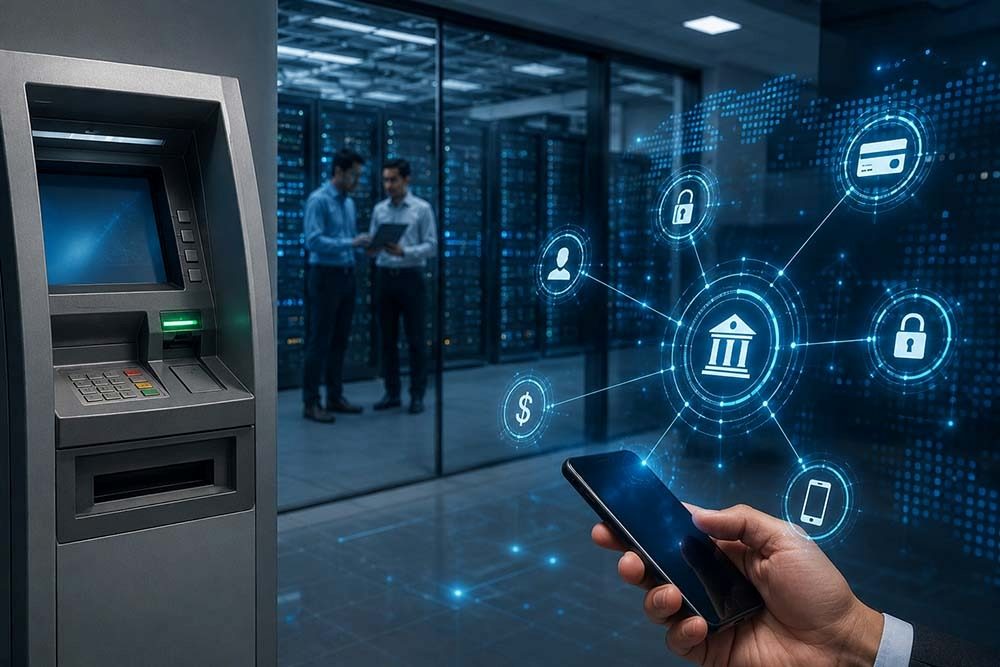
Every time someone inserts a debit card into an ATM in Canada, a highly sophisticated transaction processing system begins working within seconds. Most people only see cash dispensing from the machine, but behind the scenes, multiple networks, financial institutions, and encrypted systems communicate instantly to verify balances, authorize withdrawals, and protect account security. Understanding how ATM technology operates can help business owners, ATM operators, and curious consumers better appreciate the systems powering Canadian banking infrastructure. This article explains the ATM transaction processing system in Canada, including how transactions move through banking networks and why secure processing matters in 2026.
What Is an ATM Transaction Processing System?
An ATM transaction processing system is the technology infrastructure that allows ATMs to communicate with banks and payment networks securely. It manages transaction requests, verifies account information, authorizes withdrawals, and records transaction data in real time.
People researching ATM transaction processing system in Canada often discover that ATMs rely on multiple connected systems working together simultaneously. These systems include the ATM terminal itself, transaction processors, banking networks, payment switches, and the customer’s financial institution.
Without a reliable processing infrastructure, ATMs could not verify balances or safely complete transactions. Every withdrawal, balance inquiry, deposit, or transfer depends on secure communication between these connected financial systems.
How ATM Transaction Processing Works in Canada
Understanding how ATM transaction processing works in Canada begins with the customer inserting a debit or bank card into the ATM. The machine reads the card information and requests a personal identification number for security verification.
Once entered, the ATM encrypts the information and sends a transaction request through a secure banking network. This request travels through transaction processors and payment networks connected to the customer’s financial institution.
People learning how ATM transaction processing works in Canada should understand that the bank must verify several factors before approving the transaction. The system checks account balances, confirms card validity, verifies PIN accuracy, and evaluates fraud protection measures.
If approved, authorization returns to the ATM within seconds. The machine dispenses cash, updates account balances, and records the transaction electronically for both the customer and the financial institution.
What Happens Behind the Scenes During a Withdrawal?
The ATM network and processing Canada infrastructure operate continuously to ensure secure and accurate financial transactions. While customers see only a quick withdrawal process, several technical actions occur almost instantly behind the scenes.
First, encrypted transaction data travels from the ATM to a transaction processor. The processor routes the request through the appropriate financial network based on the card issuer and transaction type. The customer’s bank then reviews the request before issuing approval or denial.
People exploring the ATM network and processing Canadian systems often underestimate how much fraud detection occurs during these few seconds. Banks monitor unusual withdrawal patterns, geographic inconsistencies, transaction frequency, and account activity before authorizing requests.
After approval, the ATM dispenses cash while simultaneously updating transaction records across multiple systems. Receipts, balance updates, and account adjustments occur automatically through synchronized banking software.
Who Processes ATM Transactions in Canada?
Several organizations participate in Canadian ATM transaction processing. Financial institutions, payment processors, ATM operators, and network providers all contribute to the transaction process.
A major component of the Interac ATM processing Canada guide involves understanding the role of Interac. Interac operates one of Canada’s primary debit transaction networks, connecting financial institutions and enabling secure electronic payments nationwide.
The Interac ATM processing Canada guide also includes independent ATM processors that manage communication between privately owned ATMs and banking networks. These processors handle transaction routing, software updates, reporting systems, and settlement procedures.
Large Canadian banks may process some transactions internally while still relying on broader network infrastructure to communicate with other institutions and ATM operators across the country.
On-Us vs Off-Us ATM Transactions
One important concept within the ATM transaction processing system, Canada explained discussions involves understanding on-us and off-us transactions.
An on-us transaction occurs when customers use an ATM owned by their own bank. Since the ATM and issuing institution belong to the same financial organization, transaction routing remains internal, often reducing processing complexity and fees.
An off-us transaction occurs when customers use another institution’s ATM. In these situations, the ATM operator, payment network, and card issuing bank must coordinate together to complete the transaction securely.
The ATM network and processing Canada system manages both transaction types efficiently, although off-us transactions may involve additional interchange fees or surcharge costs depending on banking agreements and account terms.
Why Secure Processing Matters
Security remains essential throughout every stage of how ATM transaction processing works Canada systems. Financial institutions use encryption, fraud monitoring software, chip card technology, and secure communication protocols to protect customer information.
The Interac ATM processing Canada guide emphasizes continuous monitoring because cyber threats and fraud techniques continue evolving. ATM operators regularly update software, monitor suspicious activity, and maintain compliance with banking security standards.
Reliable processing systems protect consumers while helping financial institutions maintain confidence in Canada’s electronic banking infrastructure.
FAQ’s
Q1. How does an ATM transaction processing system work?
A: The system securely transmits transaction requests between the ATM, payment networks, and financial institutions to verify account information and authorize transactions.
Q2. What happens behind the scenes when someone withdraws cash at an ATM?
A: Encrypted transaction requests travel through banking networks where account balances, PINs, fraud checks, and authorization approvals are processed before cash is dispensed.
Q3. Who processes ATM transactions in Canada?
A: Canadian ATM transactions are processed by banks, payment processors, ATM operators, and networks such as Interac.
Q4. What is the difference between on-us and off-us ATM transactions?
A: On-us transactions occur at ATMs owned by the customer’s bank, while off-us transactions involve ATMs operated by different financial institutions or independent operators.