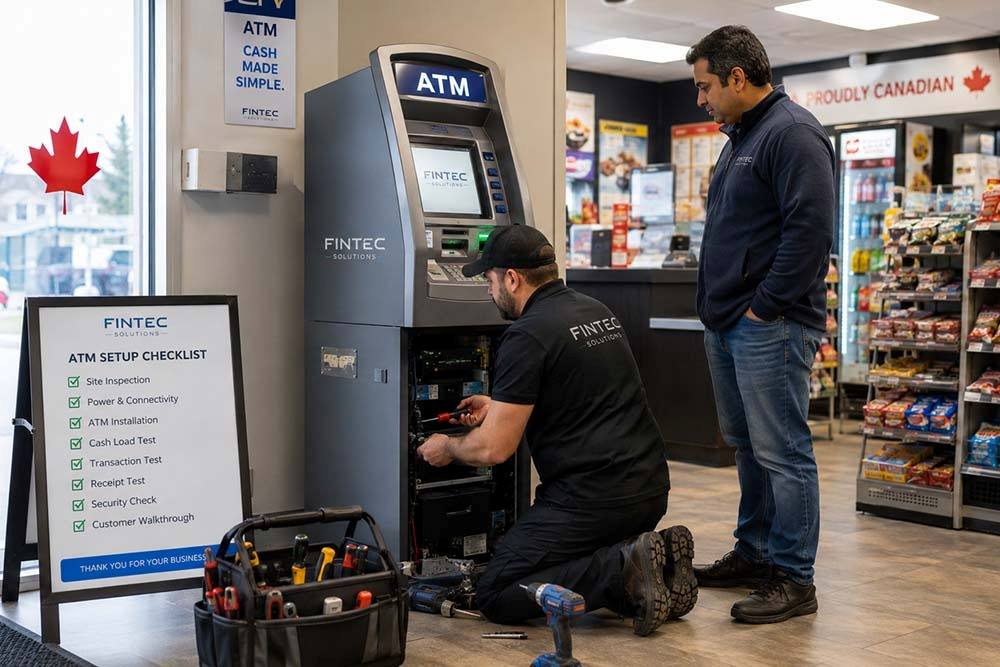
Installing an ATM can be a profitable addition for many businesses, such as convenience stores, gas stations, hotels, and retail locations. However, the process involves more than simply placing a machine on-site. If you are exploring ATM machine installation in Canada 2026, understanding setup requirements, timelines, and regulations will help you launch smoothly and avoid costly delays.
This guide explains how to install an ATM Canada businesses can rely on, including technical requirements, permits, and installation steps.
How Long Does It Take to Install an ATM Machine in Canada
The full process typically takes between 1 and 3 weeks, depending on preparation and provider coordination.
The timeline usually includes:
Site assessment and approval
Equipment delivery
Internet and electrical setup
Installation and configuration
Testing and network activation
If the location is already prepared with proper wiring and connectivity, the physical installation itself can be completed in a few hours. However, banking network approval and setup often extend the timeline.
Understanding ATM Setup Requirements Canada Business Owners Need
Before installation, businesses must meet specific ATM setup requirements Canada business operators should know.
The key requirements include:
A secure indoor or covered location
Stable electrical supply
Reliable internet connection
Sufficient floor space and accessibility
Agreement with an ATM service provider or processor
Security is also important. Many providers require surveillance cameras or monitored environments to reduce fraud risk.
Electrical and Internet Requirements for ATM Machines
A stable power supply is essential. Most ATMs require a standard grounded electrical outlet, typically 110–120V in Canada. It is recommended to have a dedicated circuit to prevent overloads or interruptions.
For connectivity, ATMs require a secure and stable internet connection. This can be provided through:
Wired Ethernet connection (preferred)
Dedicated DSL or cable line
Cellular LTE backup in some models
The ATM network connection in Canada must be reliable because downtime directly affects transaction processing and revenue.
Backup connectivity is highly recommended to ensure uninterrupted service in case of internet failure.
Do You Need a Permit to Install an ATM Machine in Ontario
In most cases, there is no specific provincial license required just to install an ATM in Ontario. However, there are still important compliance considerations.
You may need:
Business licensing depends on the municipality
Zoning approval for installing signage or exterior units
Building permits if electrical modifications are required
Compliance with accessibility and safety regulations
It is always recommended to check with your local city office before installation to ensure all requirements are met.
Who Installs ATM Machines for Businesses in Canada
ATM installation is typically handled by specialized ATM providers, payment processors, or independent ATM deployers (IADs). These companies manage the full setup process, including hardware delivery, network integration, and maintenance.
Banks sometimes offer ATM placement services, but most small and medium businesses work with private ATM service providers.
These professionals handle:
Site inspection and approval
Machine delivery and installation
Network and software configuration
Ongoing maintenance and cash management
Working with experienced providers ensures compliance and reduces technical issues during launch.
Step-by-Step ATM Installation Process
The installation process generally follows a structured approach:
First, the provider evaluates your location to ensure it meets technical and security requirements.
Next, the ATM machine is delivered and positioned at the approved site.
Then, technicians connect power and internet lines and configure the machine to the ATM network.
Finally, testing is conducted to ensure transactions, cash dispensing, and communication systems are working correctly.
Once approved, the ATM goes live and becomes available for customer use.
Costs and Considerations
While installation itself may be included in service agreements, businesses should consider ongoing costs such as:
Cash loading and replenishment
Transaction processing fees
Maintenance and repairs
Network and service charges
Revenue is typically generated through surcharge fees on transactions, making location selection extremely important.
Choosing the Right Location
A high-traffic location significantly increases ATM profitability. Ideal placements include convenience stores, malls, hotels, and entertainment venues.
In busy urban areas like Toronto or Vancouver, ATMs often see higher transaction volumes due to foot traffic and tourism.
Final Thoughts
Setting up an ATM in Canada is a straightforward process when handled by experienced providers. By understanding the ATM machine installation Canada 2026 requirements, ensuring proper ATM setup requirements Canada business compliance, and securing a reliable ATM machine network connection Canada infrastructure, you can launch quickly and efficiently.
Whether you are adding passive income to your business or improving customer convenience, a properly installed ATM can become a valuable asset when placed and managed correctly.
FAQ’s
Q1. How long does it take to install an ATM machine in Canada?
A: It usually takes 1 to 3 weeks, depending on site readiness, approvals, and network setup.
Q2. What are the electrical and internet requirements for an ATM machine?
A: A standard grounded electrical outlet and a stable wired internet connection are required, often with backup connectivity.
Q3. Do I need a permit to install an ATM machine in Ontario?
A: Generally, no special permit is required, but local zoning, electrical, or business regulations may apply in Ontario.
Q4. Who installs ATM machines for businesses in Canada?
A: ATM providers, payment processors, and independent ATM deployers typically handle installation, setup, and maintenance.