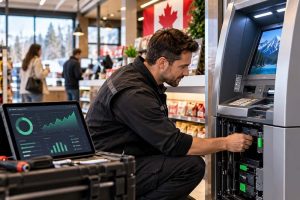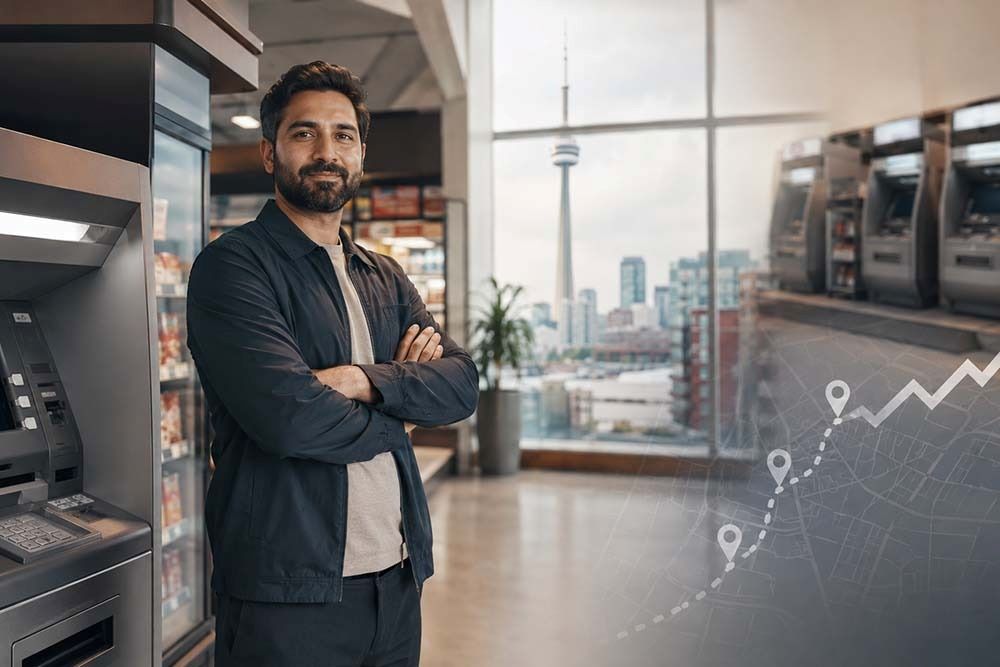
Starting an ATM route can be an appealing business opportunity for entrepreneurs looking to build a location-based operation in Canada. An ATM route business Canada 2026 strategy typically involves purchasing or leasing ATMs, placing them in suitable businesses, maintaining the machines, and earning income from transaction fees. While one machine can be a starting point, long-term success depends on selecting strong locations and gradually building a reliable portfolio.
What Is an ATM Route Business?
An ATM route business involves owning or operating automated teller machines placed at third-party locations such as convenience stores, restaurants, entertainment venues, retail shops, and other businesses. When customers withdraw cash, the ATM operator may receive a surcharge or other agreed revenue.
The business is attractive because machines can continue generating transactions without requiring an employee to operate them. However, owners still need to handle cash loading, maintenance, monitoring, compliance, and relationships with location owners.
If you want to start ATM route Canada 2026, think of the first machine as the foundation of a larger operation rather than the entire business.
How to Start Your First ATM Route
Before purchasing equipment, research your target market and identify businesses where customers may regularly need cash. Location quality is usually more important than simply owning more machines.
Create a basic business plan covering equipment costs, installation, cash requirements, transaction fees, maintenance, insurance, transportation, and expected transaction volume. You should also investigate applicable Canadian federal, provincial, and municipal requirements before launching.
Once you have identified a promising location, discuss the arrangement with the business owner. Put the agreement in writing and clearly define responsibilities, revenue sharing, access, maintenance, and termination terms.
Building an ATM Machine Portfolio
After your first machine becomes stable, reinvest a portion of your operating cash flow into additional locations. This is how you can gradually build an ATM machine portfolio Canada entrepreneurs can manage efficiently.
Instead of expanding randomly, track every machine individually. Record transaction volume, revenue, expenses, cash-loading requirements, downtime, and location performance. These numbers help you identify which locations deserve additional investment.
A portfolio also creates operational efficiencies. Routes can be planned geographically, allowing you to service several machines during one trip. Over time, strong systems can make a larger route easier to manage than a collection of disconnected machines.
How to Find New ATM Locations
Finding locations is one of the most important parts of growing an ATM route. Look for businesses with consistent customer traffic and situations where cash may still be useful.
Potential locations can include independent retailers, restaurants, bars, convenience stores, recreational businesses, and other establishments that attract regular visitors. Approach owners directly and explain the benefits of having an ATM available to their customers.
You can also use networking, local business associations, referrals, and targeted outreach. When approaching prospects, focus on solving a business problem rather than simply asking whether they want an ATM.
How Many Machines Do You Need?
There is no universal number of machines required to create a profitable route. Profitability depends on transaction volume, surcharge arrangements, operating costs, cash requirements, location quality, and equipment expenses.
For this reason, someone with a small number of high-performing machines could potentially outperform an operator with many weak locations. Start with manageable locations, measure performance, and expand when the numbers support additional investment.
Understanding ATM Route Income
ATM route income Canada monthly can vary significantly. A machine’s revenue depends primarily on how frequently customers use it and the economics of each transaction.
Avoid relying on advertised income figures without examining the assumptions behind them. Calculate expected revenue using realistic transaction estimates and subtract expenses such as location commissions, processing costs, repairs, transportation, insurance, and cash-management costs.
Your goal should be predictable net cash flow rather than simply a high number of transactions.
Scaling From One Machine to a Route
Once your first ATM performs consistently, create repeatable systems for cash replenishment, maintenance, reporting, and location management. Standardized processes become increasingly important as your portfolio grows.
You should also establish criteria for evaluating new locations. Consider customer traffic, nearby competing ATMs, operating hours, security, accessibility, and the business owner’s willingness to support the installation.
A disciplined expansion strategy can help you build an ATM machine portfolio Canada operators can scale without losing control of day-to-day operations.
Final Thoughts
An ATM route can become a structured business when approached with realistic financial planning and strong location selection. The best way to start ATM route Canada 2026 is to learn the economics with your first machine, measure actual performance, and expand based on evidence.
Rather than chasing the largest possible number of machines, focus on building a route containing reliable locations. Over time, careful reinvestment, efficient servicing, and strong business relationships can help transform individual ATMs into a scalable portfolio.
FAQs
Q1:What is an ATM route business and how does it work in Canada?
A: An ATM route business involves placing and operating ATMs at third-party locations. The operator manages equipment, cash, maintenance, and processing while generating revenue from eligible transactions and agreed fees.
Q2:How many ATM machines do you need to build a profitable route?
A: There is no fixed number. Profitability depends on transaction volume, costs, location agreements, and machine performance. A smaller route with strong locations may be more profitable than a larger route with weak ones.
Q3:How do I find new ATM locations to expand my route in Canada?
A: Approach businesses directly, use referrals, network with local entrepreneurs, and identify high-traffic establishments where customers may benefit from convenient cash access.
Q4:What is a realistic monthly income from an ATM route in Canada?
A: There is no single realistic figure because performance varies by location and expenses. Calculate projected net income from expected transaction volume, fees, commissions, maintenance, processing, transportation, and other operating costs.