An ATM can be more than a convenient cash dispenser. It may support customer service while creating an additional revenue stream. ATM machine small business passive income Canada 2026 can help retailers decide whether installing a machine makes practical financial sense.
An in-store machine can become a relatively low-touch business asset.
How an ATM Can Generate Additional Income
ATMs may earn revenue from transactions. Customers pay an applicable surcharge for convenient access to cash, and transaction revenue may be shared according to the contract.
This ATM machine benefit, small business Canada operators consider relevant in locations with regular foot traffic.
When evaluating ATM machine small business passive income Canada 2026, owners should calculate equipment costs, processing arrangements, cash requirements, maintenance expenses, and expected transaction volume. Revenue projections should be realistic rather than based on guaranteed earnings.
Why ATMs Can Improve Customer Experience
ATM machine benefit small business Canada. Customers who need cash can access it without leaving the premises or abandoning a purchase.
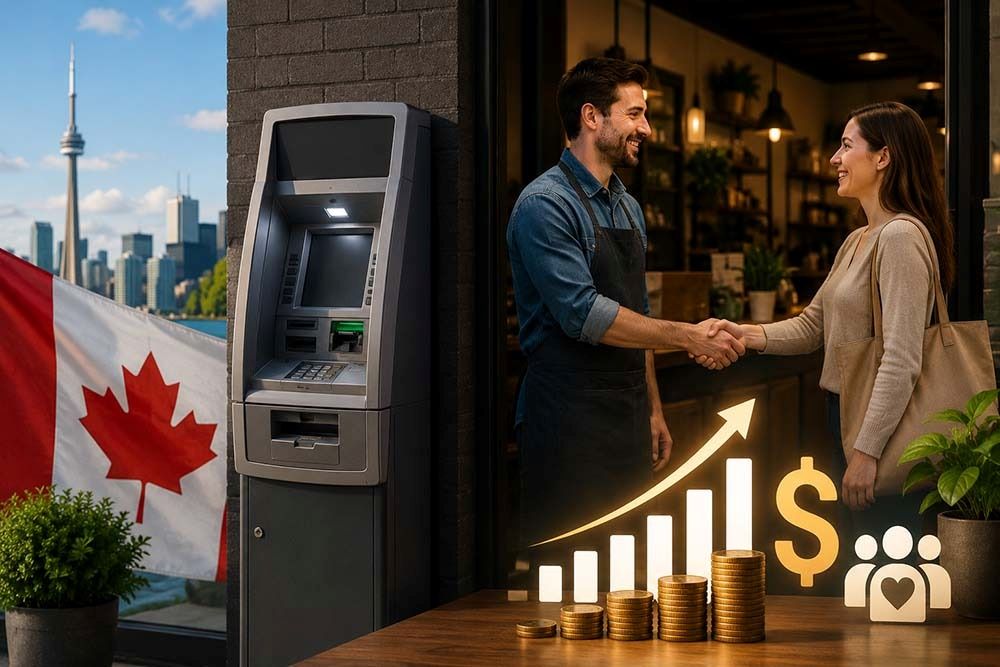
The small business ATM dual-purpose Canada concept combines customer convenience with potential transaction earnings. Instead of viewing the machine only as equipment, owners can evaluate its role in the customer journey.
Creating More Passive ATM Operations
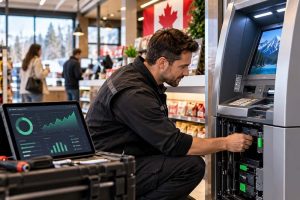
In-store ATM passive earnings in Canada become more manageable when owners create repeatable operating procedures. Transaction monitoring can help identify cash levels and determine when replenishment is required.
For in-store ATM passive earnings in Canada, cash forecasting is important. Owners can examine withdrawal activity and establish replenishment schedules.
The goal is to reduce emergency visits without overloading the machine with unnecessary cash. Strong cash controls, reconciliation procedures, and restricted access are essential.
Choosing the Right Small Business for an ATM
Convenience stores, bars, nightclubs, restaurants, laundromats, entertainment venues, independent retailers, and high-traffic service businesses may benefit when customers frequently need cash.
A small business ATM machine dual-purpose Canada strategy works best where the machine solves a genuine customer problem. A location surrounded by free bank ATMs may experience lower demand than a busy venue with limited nearby cash access.
Owners considering an ATM as a small business passive income Canada 2026 strategy should review foot traffic, customer behaviour, nearby ATM availability, operating hours, and average transaction demand before installation.
Placement, Security, and Visibility Matter
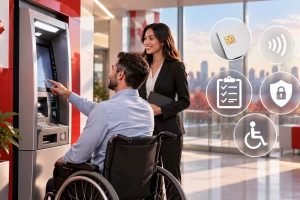
An ATM should be visible and easy for customers to access without disrupting business operations. Clear signage may help customers notice the service.
Security also deserves careful planning. The machine should be installed appropriately, access should be controlled, and cash handling procedures should limit unnecessary exposure. Businesses should discuss installation, insurance, and security requirements with relevant providers and professionals.
This is another ATM machine benefit small business Canada owners should assess carefully. A poorly placed machine may receive limited use, while a conveniently positioned ATM can better support customers.
Making the Dual-Purpose Model Work
The small business ATM machine dual-purpose Canada model depends on balancing convenience and financial performance. Owners should track transaction volume, downtime, cash replenishment frequency, fees, and net earnings.
In-store ATM passive earnings in Canada should be measured after expenses rather than judged only by gross surcharge revenue. Regular performance reviews can show whether the machine remains worthwhile. A simple monthly review can also reveal changing withdrawal patterns, helping owners adjust cash levels, service schedules, and performance expectations before problems affect customers.
FAQ’s
Q1. Can a small business owner earn passive income from their own ATM machine?
A: Yes, depending on the ownership and service arrangement, a business may earn revenue from eligible ATM transactions. However, earnings depend on transaction volume, fees, expenses, and contractual terms. ATM income is better described as low-touch revenue than completely passive income.
Q2. Does an in-store ATM machine improve customer experience?
A: It can. An in-store ATM gives customers convenient cash access without requiring them to leave the business. Its value depends on customer needs, location, nearby alternatives, and how frequently cash is used.
Q3. How do I manage cash replenishment for my business ATM passively?
A: Use transaction monitoring and historical withdrawal data to create a replenishment schedule. Some providers may offer remote monitoring or cash management services. Maintain secure cash handling and reconciliation procedures regardless of the service model.
Q4. What type of small business benefits most from having its own ATM?
A: Businesses with strong foot traffic and frequent cash demand may benefit most. Convenience stores, entertainment venues, bars, laundromats, restaurants, and independent retailers are common examples. Actual performance depends on location, customer behaviour, nearby ATMs, and transaction volume.