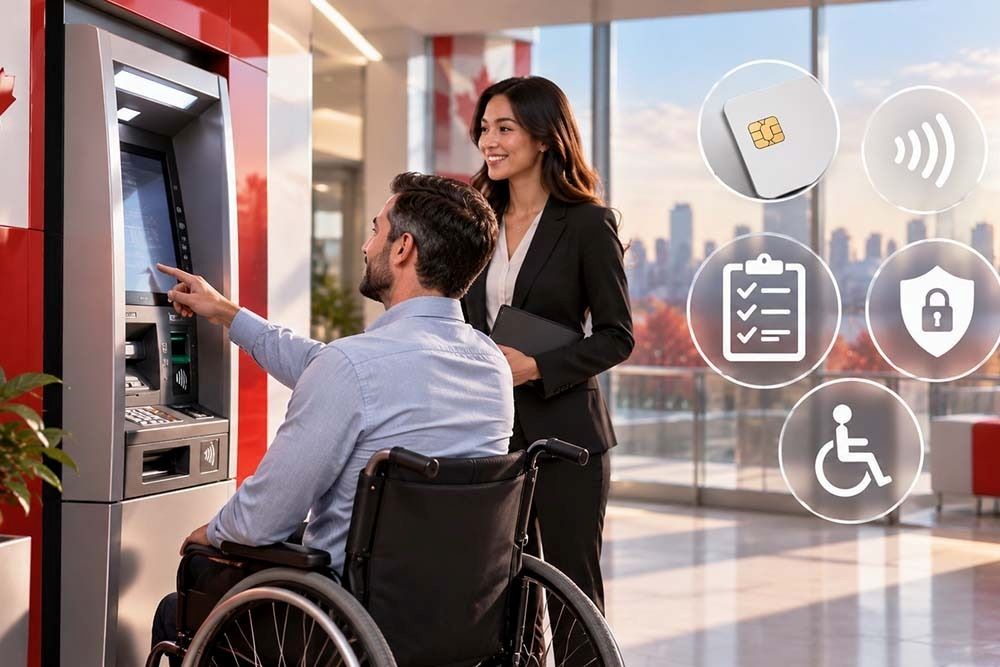
Operating private ATMs in Canada involves more than installing a machine and processing withdrawals. ATM machine compliance Canada 2026 requires operators, acquirers, and service providers to understand anti-money laundering obligations, EMV security, accessibility, surcharge disclosure, and operational controls. Exact obligations depend on the role your business performs.
Understanding FINTRAC Requirements
FINTRAC ATM Canada requirements changed on October 1, 2025. Businesses providing acquirer services for private automated banking machines became subject to obligations under Canada’s anti-money laundering and anti-terrorist financing framework.
FINTRAC defines an acquirer as an entity that connects a private ATM to a payment card network to facilitate transactions. This matters because simply owning or hosting an ATM does not automatically mean every business performs regulated acquirer services.
Where FINTRAC ATM Canada requirements apply, an acquirer may need FINTRAC registration as a money services business, a compliance program, risk assessments, client identification procedures, recordkeeping, ongoing monitoring, and required reporting. Operators should confirm their role rather than assuming registration is unnecessary.
Building a Strong Compliance Program
ATM machine compliance Canada 2026 should be treated as an ongoing process. A compliance program should identify responsibilities, document policies, assess money laundering and terrorist financing risks, train personnel, and test whether controls work.
Businesses should maintain accurate information about merchants, ATM locations, ownership, source of funds where required. FINTRAC guidance should be reviewed whenever the business model, network relationship, or regulations change.
Understanding EMV Compliance
EMV compliance ATM Canada 2026 refers to supporting secure chip-based card transactions through compatible hardware, software, certification, and payment network processes. EMV chip technology creates encrypted data that makes counterfeit-card fraud more difficult than magnetic-stripe processing.
Operators should not assume that having a chip reader means the entire environment is compliant. EMV compliance ATM Canada 2026 can involve terminal configuration, approved software, network certification, encryption, PIN security, and requirements imposed by the acquirer or payment network.
If an older machine has not been updated, confirm its status with the processor or acquirer. Proper EMV compliance ATM Canada 2026 helps protect cardholders, operators, and financial institutions from security risks.
Accessibility for ATM Users
ATM accessibility standards Canada are important when selecting, installing, or upgrading equipment. Accessibility Standards Canada publishes CSA/ASC B651.2, a standard addressing accessible design for automated banking machines.
The standard covers device design, installation, site preparation, usability, and accessible interaction. Practical considerations can include reachable controls, clear floor space, visual information, tactile guidance, screen readability, and features supporting users with disabilities.
ATM accessibility standards Canada should also be considered alongside applicable federal, provincial, territorial, building, and human rights requirements. Legal obligations affecting an ATM may depend on the operator, location, jurisdiction, and organization involved.
Network and Surcharge Requirements
Private ATM operators must follow their payment network and acquirer agreements. Interac identifies acquirers as participants that operate card-accepting devices and transmit transaction information through the network.
Surcharges must be properly disclosed before completion, and customers must have an opportunity to cancel if they do not want to pay the surcharge. ATM machine compliance Canada 2026 therefore includes customer-facing controls as well as back-office compliance.
Operators should maintain transaction records, electronic journals, service logs, security procedures, and processor communications according to applicable requirements.
Regular Compliance Reviews Matter
A machine that was compliant when installed may not remain compliant forever. Software updates, network rules, regulatory changes, accessibility expectations, or business relationships can create new requirements.
Review FINTRAC ATM Canada requirements regularly, verify certification with your acquirer, and include ATM accessibility standards Canada when replacing or relocating equipment.
FAQs
Q1: What compliance regulations apply to ATM machine operators in Canada?
A: Requirements can include FINTRAC obligations for businesses providing regulated private ATM acquirer services, payment network rules, EMV security requirements, contractual obligations, accessibility requirements, privacy rules, and applicable provincial or federal laws. Obligations depend on the operator’s role and jurisdiction.
Q2: Is FINTRAC registration required for ATM machine operators in Canada?
A: Not automatically for every ATM owner or location. However, businesses engaged in providing acquirer services for private ATMs are covered by FINTRAC requirements effective October 1, 2025 and may need registration as a money services business. Confirm your activities against current FINTRAC guidance.
Q3: What is EMV chip compliance for ATMs and is my machine compliant?
A: EMV involves secure chip-card processing using compatible hardware, software, and network certification. Ask your acquirer or processor to confirm whether your machine, application, encryption, and certification satisfy current network requirements.
Q4: What accessibility features must ATM machines have in Canada?
A: Requirements vary by jurisdiction and organization. ATM accessibility standards Canada provide guidance for accessible machines and sites, including usable controls, suitable reach ranges, clear space, readable displays, and accessible visual, tactile, or audio interaction. Operators should confirm which legal accessibility requirements apply to each location.